After seven years in the trenches of fashion merchandising—from the frantic pace of buying offices to the pristine, artificial world of editorial styling—I have learned one immutable truth: a briefcase is not an accessory. It is a piece of infrastructure. If you are flying 50 to 80 segments a year, your bag is your mobile office, your seatmate, and, frequently, the only thing keeping your professional life from spilling onto the terminal floor.
I see people drop significant amounts of money on bags that look spectacular on a studio backdrop but fall apart the moment they encounter a real-world environment. In the industry, we often see briefs priced under £200 that look promising in high-resolution photography but fail within 18 months of real use. If you want a piece that lasts, you have to stop looking at the color and start looking at the mechanics.
The "Stand Test": Why Your Bag Shouldn't Be a Collapsed Tent
One of my biggest pet peeves is the "slumping bag." You know the one: you set it down at the boarding gate, and it collapses into a pile of limp leather. A briefcase should hold its structure even when empty. If it can't support its own weight, it certainly won’t protect your laptop when you’re sprinting to catch a connection in Munich or Chicago.
When I evaluate a bag, I perform the stand test. Set the bag on a hard, flat surface. Does it hold its shape, or does it tip over? Does it maintain an upright profile, or does it sag? A structured bag—often achieved through internal reinforcements and high-quality, vegetable-tanned hides—is a hallmark of professional intent. I also carry an A4 sheet of paper with me to every store. I slide it into the main compartment. If the bag is so soft that it warps the paper or makes it difficult to insert without snagging, the structure is inadequate for document safety.
Hardware: The Silent Indicator of Quality
While the marketing team wants you to talk about the "artisanal stitching," I am busy looking at the hardware. I have a zero-tolerance policy for visible logos and branded zipper pulls. If a https://bizzmarkblog.com/why-do-briefcases-under-200-look-worn-out-so-fast-a-merchandisers-deep-dive/ company feels the need to plaster their name on every metal fixture, they are usually compensating for a lack of design integrity. Quiet luxury is not just a trend; it is a design philosophy that prioritizes function and longevity over brand signaling.
When you inspect a bag, turn it over and look at the zippers. I look for YKK markings. There is a reason YKK is the industry gold standard; their zippers don't catch, they don't jam, and they don't lose teeth after six months of travel. If a bag uses a generic, unbranded zipper, run.
The Hardware Checklist
- Zippers: Must be smooth, metal (not plastic), and ideally YKK. Stitching: Look for consistent, tight lock-stitches. Loose threads at stress points (where handles meet the body) are dealbreakers. Branding: If the logo is larger than a postage stamp, it is a liability. Warranty: Avoid companies that offer "replace-only" warranties. True quality brands offer repair services because they build bags to be fixed, not discarded.
Leather Literacy: Beyond "Genuine Leather"
If you see the term "genuine leather" on a product tag, proceed with extreme caution. In the leather trade, "genuine" is often a marketing euphemism for the lowest-grade split leather, which is essentially a synthetic coating glued onto leather scraps. It lacks the durability for travel and will peel within a few seasons.
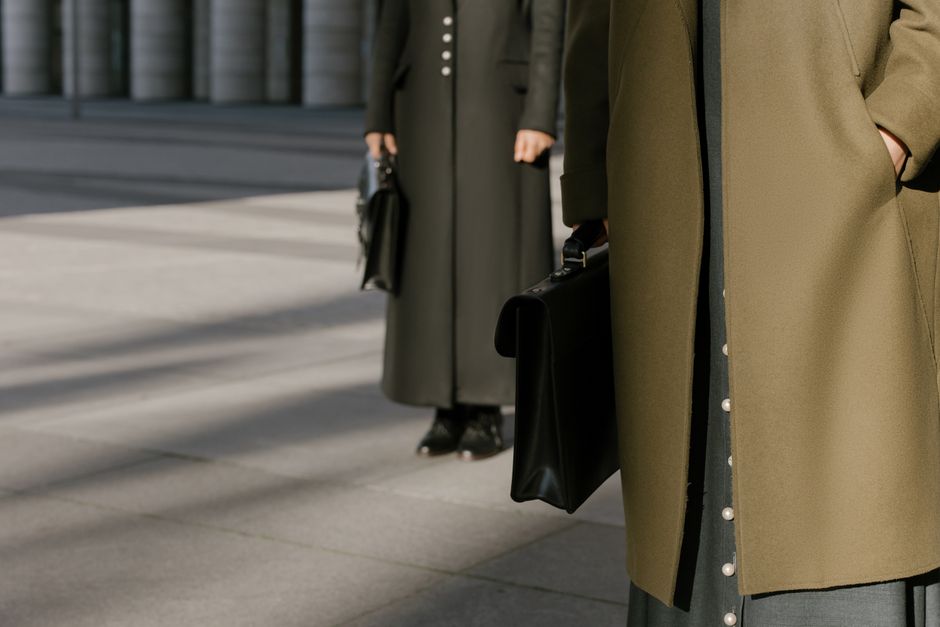

Look for full-grain, vegetable-tanned leather. Brands like Von Baer understand the nuance of this material; they prioritize the natural patina that develops over time, which actually improves the bag’s appearance with years of travel. Vegetable tanning uses organic materials like tree bark, which is not only more durable but also aligns with the sustainability standards discussed at forums like the Copenhagen Fashion Summit, which pushes the industry to move away from toxic chrome tanning.
Travel-Specific Features: The Frequent Flyer Audit
If you are spending more than 40 nights a year in hotels, your bag needs to integrate with your luggage. A briefcase without a functional trolley sleeve is a design failure in the modern era. You should not have to carry your bag on your shoulder while maneuvering a rolling suitcase; it should slide securely over the luggage handle. I test the trolley sleeve to ensure it is wide enough for various suitcase handle widths and stitched with reinforced bar-tacks so it doesn't tear under the weight of the bag.
Then, there is strap comfort. Test the bag fully loaded. Does the shoulder strap have a sliding pad that stays in place, or does it migrate down to your collarbone? A poor strap is a primary cause of travel fatigue. I look for wide, thick leather straps with non-slip padding that distributes weight evenly across the trapezius.
Feature The Cheap Bag (Under £200) The Investment Brief Leather "Genuine" / Corrected Grain Full-Grain Vegetable Tanned Zippers Unbranded/Generic YKK or Riri Structure Slumps/Collapses Rigid/Stands on own Hardware Branded/Flashy Solid Brass/Matte Finish Longevity 12–18 months 10+ years (repairable)Final Thoughts: The Philosophy of Proportion
Finally, consider the proportion of the bag against your frame. A bag that is too wide or too deep will become an obstacle in narrow economy aisles. Professional restraint is the key to a successful work wardrobe. You want a piece that looks as appropriate in a boardroom as it does in a lounge.
When you buy a briefcase, you are travel briefcase personal item paying for the cost of the raw materials, the skill of the craftsman, and the longevity of the design. If the price point is suspiciously low, someone down the line—the tanner, the stitcher, or the environment—paid the difference. Invest in a bag that respects your intelligence, doesn't shout its brand name to the world, and holds up to the reality of the airport terminal. Your back, your documents, and your wallet will thank you in the long run.