I still keep a tiny, frayed notebook in my back pocket. It’s not for to-do lists or quarterly projections. It’s for “what actually helped” on a Tuesday. During my eleven years as a corporate team lead, I treated every minute as a resource to be optimized. When I inevitably burned out, I realized that my leisure time was just as broken as my work time. I was "resting" by doom-scrolling, which, as it turns out, is the cognitive equivalent of trying to put out a fire with gasoline.
We are living in an era of relentless productivity guilt. If you aren't monetizing your hobby, or at least using it to "level up" a skill, you’re told you’re wasting your time. This is a lie designed to keep you in a state of perpetual production. To lower your stress hormones like cortisol and adrenaline, we need to stop thinking about hobbies as "projects" and start thinking about them as biological circuit breakers.

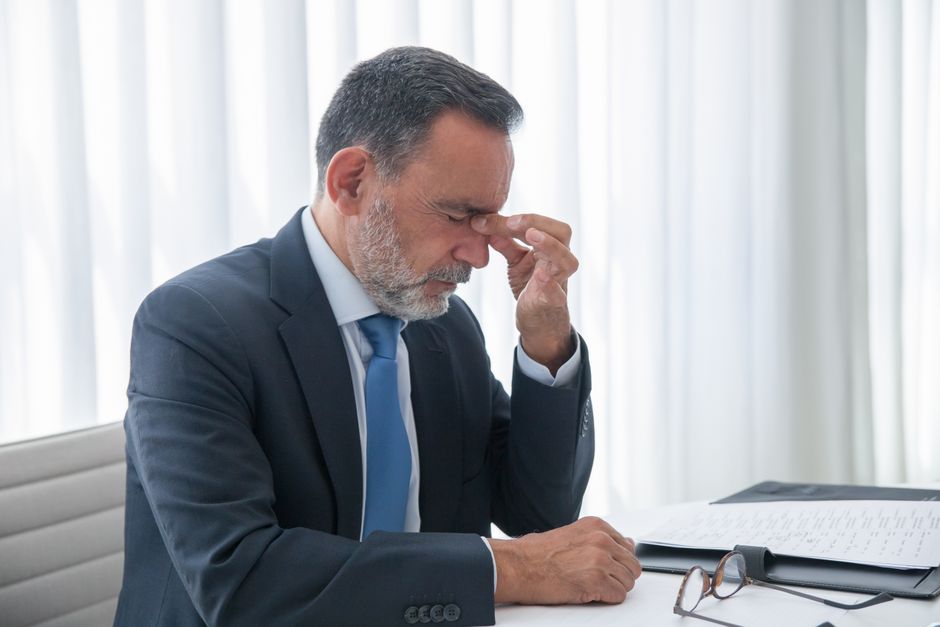
The Science of Attention Depletion
Think about your brain like a server rack. Throughout the workday, you are bombarded by thousands of tiny, micro-stressors. You know those Cloudflare Turnstile challenge pages or that grueling reCAPTCHA verification you have to solve just to access a website? Your brain is doing that all day long—processing nuance, filtering spam-level information, and proving your "humanity" in a digital landscape that demands robotic efficiency.
This is called attention depletion. When your focus is constantly fragmented, your prefrontal cortex gets fatigued. When that happens, your body enters a state of chronic high alert, keeping stress hormones elevated even when you’re "off the clock." According to research from the American Psychological Association, chronic stress isn't just about the big events; it’s the cumulative load of these micro-demands that erodes our well-being.
Recovery isn't just "not working." If you sit on the couch and scroll through your phone, you are still processing input. You are still dealing with algorithmic triggers designed to keep your focus locked in. That isn’t rest. That is just a different, lower-quality form of work.
Interactive vs. Passive Leisure: The Secret to the Relaxation Response
In my notebook, I track the difference between what I call "passive consumption" (Netflix, social media) and "interactive leisure." Interactive leisure requires you to move from the role of a consumer to the role of an architect.
When you engage in a hobby that requires active participation—woodworking, strategy gaming, weightlifting, or even something as specific as navigating the high-engagement environments found on platforms like MRQ—you are forcing your brain to switch its neural state. You are moving from a state of "threat detection" to a state of "creative focus."
Why Distraction is Actually a Recovery Tool
People love to call all distraction "lazy." That’s a mistake. When you are burnt out, you don't need "mindfulness" in the sense of sitting still and obsessing over your thoughts. You need a cognitive diversion. You need to pull your attention away from the stressor so completely that your body is forced to initiate the relaxation response. If your hobby is engaging enough, your brain literally cannot afford to keep producing cortisol because it needs those resources for the task at hand.
Leisure Type Physiological Result Typical Tuesday Outcome Passive (TV/Scrolling) Low-level anxiety / High input Brain fog, guilt, feeling "drained" Interactive (Hobby/Skill) Cortisol regulation / Flow state Mental clarity, sense of agencyHow to Test Your Hobbies on a Tuesday
The problem with most "wellness" advice is that it’s designed for a perfect Saturday morning when you have zero obligations. That’s useless to a man who just got off a three-hour conference call. You need to test your hobbies on a normal Tuesday. If a hobby doesn't work when you're tired, it’s not a stress-reduction tool; it’s just another obligation.
Here is how you actually use hobbies to reduce stress hormones naturally:
The 20-Minute Barrier: Don’t commit to "starting a new life." Commit to 20 minutes of a low-stakes, interactive hobby. If it takes longer than 5 minutes to set up, you won't do it on a Tuesday. Kill the "Output" Expectation: If you are painting, don't worry if it looks good. If you are gaming, don't worry about the leaderboard. The goal is the play benefits—the physiological release that comes from engaging your hands and eyes in something that has zero professional utility. Digital Displacement: Use a hobby that forces you to put the phone in a drawer. If the activity requires you to interact with a screen, make sure it’s an active engagement (like strategy) rather than a passive one (like feeds).Reframing Play as Biological Necessity
I’ve written extensively about this for The Good Men Project, and the consensus among men who have survived corporate burnout is clear: play is not the absence of work; it is the prerequisite for sustainability. We have been conditioned to believe that if we aren't https://goodmenproject.com/everyday-life-2/the-psychology-of-leisure-why-we-need-distraction-and-play/ building something, we are eroding. But biology doesn't care about your productivity stats.
When you engage in play, you are signaling to your nervous system that the "hunt" is over. The immediate demand for problem-solving is gone. This triggers a drop in adrenaline and allows your body to regulate its glucose and cortisol levels. It is the biological equivalent of clearing the cache on your browser.
The "Play Benefits" Checklist
To ensure your hobby is actually working, ask yourself these three questions after your Tuesday session:
- Did I lose track of time? (This indicates a flow state, which is the antithesis of stress). Did I forget to check my phone? (This indicates true attention capture). Do I feel "lighter" rather than "numb"? (Numbness is a sign of checking out; lightness is a sign of recovery).
The Practical Reality
You don't need a mountain retreat to find peace. You need to stop asking your brain to solve endless reCAPTCHA verification-style life problems and start asking it to do something purely for the joy of the mechanics. Whether it's restoring an old engine, learning a musical instrument, or engaging in a competitive hobby, the mechanism is the same: you are reclaiming your attention from the systems that feed on it.
Stop feeling guilty about not being productive during your downtime. Productivity is for the clock. Recovery is for the human. If you can integrate even 20 minutes of "active play" into your Tuesday night, you aren't just passing time—you are systematically lowering your stress hormones and rebuilding your capacity to handle the next day's challenges. That isn't lazy. That’s professional-grade self-preservation.
Keep your notebook close. Write down what works. Ignore the advice that sounds like a boardroom slide deck. Your nervous system isn't a team member you can manage; it’s a living thing that needs play to survive.